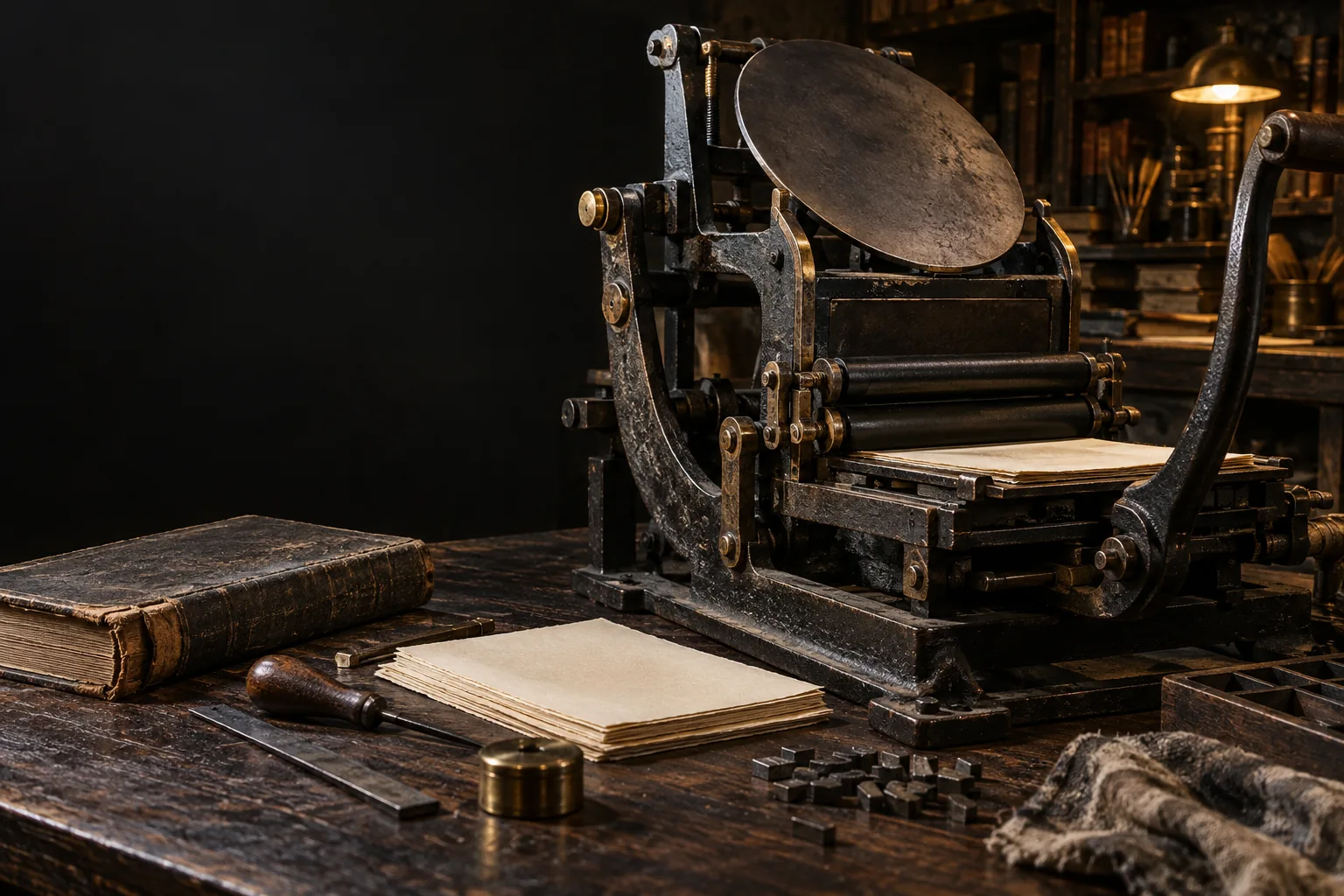
The proof press / Research, claim, proof
Make the claim carry its weight.
A strong line begins with a real question. Then the page has to prove the answer.
Enter the editA neat sentence can still say very little.
Consider a book-restoration atelier. Its opening line reads: “Give old books a new life.” It sounds pleasant, but leaves the reader with no clear situation, visible process or next step.
Conversion copywriting turns research into words that help a person judge an offer: a specific question, a claim the service can support and a clear next action. The draft has to name what can actually be examined.
THE FIRST DRAFT“Give old books
Warm words. Little evidence.
a new life.”
02 / Research becomes language
Find the question inside the claim.
In this example, the useful question is not whether restoration sounds appealing. It is what may happen to an irreplaceable object. Select a concern to see how one precise phrase changes the draft.
Choose a research question
Follow the editorial passes
Ask a bounded question
“Can the original cover be kept?”
Research lens: the original cover
The cover, Claim: Can the original cover be kept?
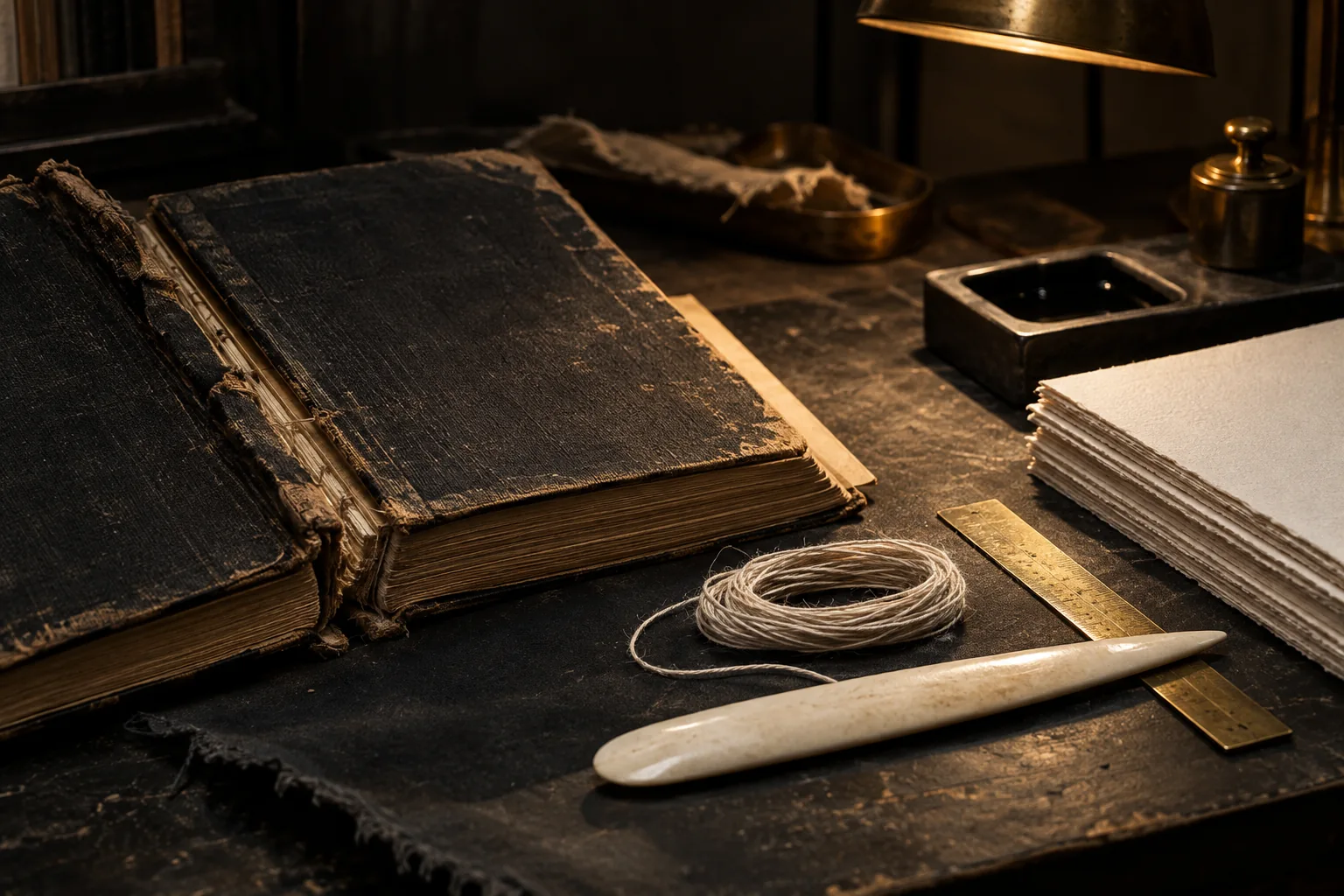
The source material
Specificity starts at the table.
A cover with a broken hinge, loose pages and a name written inside creates questions that “old books” cannot answer. Research can come from interviews, enquiries, support notes and direct observation of the work.
The copy should keep a visible boundary: an assessment may identify options, but cannot promise that every original cover can be saved. Precision makes the message more useful and keeps the claim honest.
03 / One offer, two entrances
The opening follows the reading task.
A person encountering a story in a feed and a person searching for a repair may need different first lines. The underlying promise stays within the same limits.
THE OBJECT / 01The book that could not be replaced
A split hinge leaves the original cover at risk. A closer look at the book comes before any promise about repair.
Story opening → assessmentTHE CONSTANT Assess the book before describing a treatment.
Feed example selected. The book that could not be replaced
04 / The claim audit
Make every line answerable.
Attractive language can still outrun the facts. Inspect three statements and watch the proof sheet expose what each one needs.
Define the work.
“Expert” gives no view of what happens to the book. Name the assessment or repair steps that can actually be shown.
Vague: Define the work. “Expert” gives no view of what happens to the book. Name the assessment or repair steps that can actually be shown.
The final proof
The page earns the next question.
Can the original cover be kept?
A condition check can show whether the hinge, boards and binding remain stable, and which parts may be preserved. Bring the book for an inspection before choosing a repair.
Situation · process · boundary · next stepThe atelier is illustrative. The method is practical: answer a real question, show the basis for the answer and state the limit of the promise. Useful copy invites a decision without hiding uncertainty.