from source to story
A story starts before the camera.
Content creation turns research, real material and an editorial point of view into a story suited to a particular place. A beautiful frame matters. The reason to keep watching starts earlier.
Follow the story01 / Before the shoot
Find a question worth following.
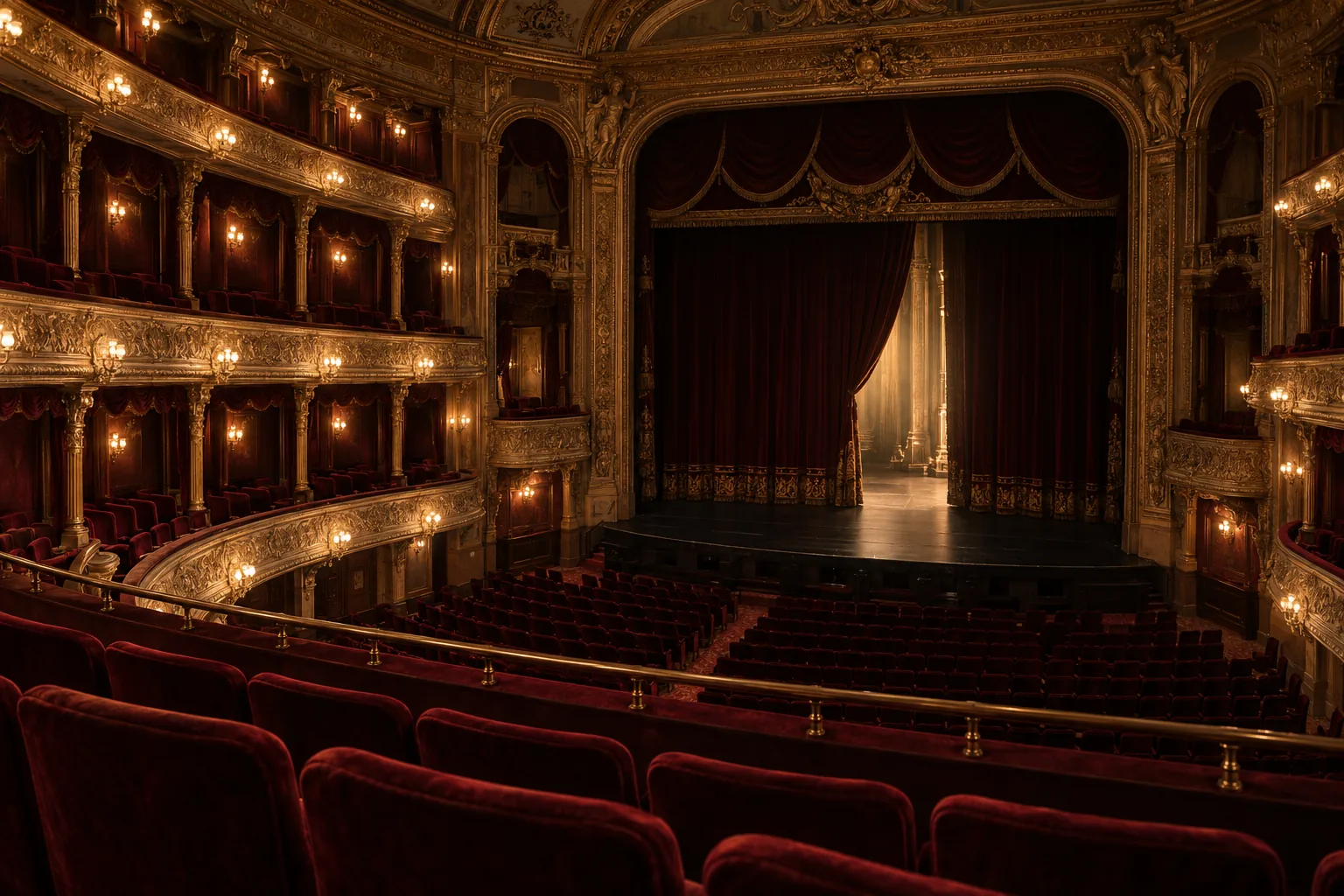
In this illustrative case, a historic theatre prepares to reopen. Chandeliers, seats and a polished stage describe the place. They do not yet explain why the story matters.
Research gives the camera a direction. What changed inside the building? Which details were repaired? What might a first visitor want to know before stepping through the doors? Staff conversations, archive material, site visits and audience questions can guide the brief.
A working question emerges: what happened between the closed doors and the finished room? It gives each shot a purpose and the edit a reason to move.
02 / Behind the curtain
Show the work behind the reveal.
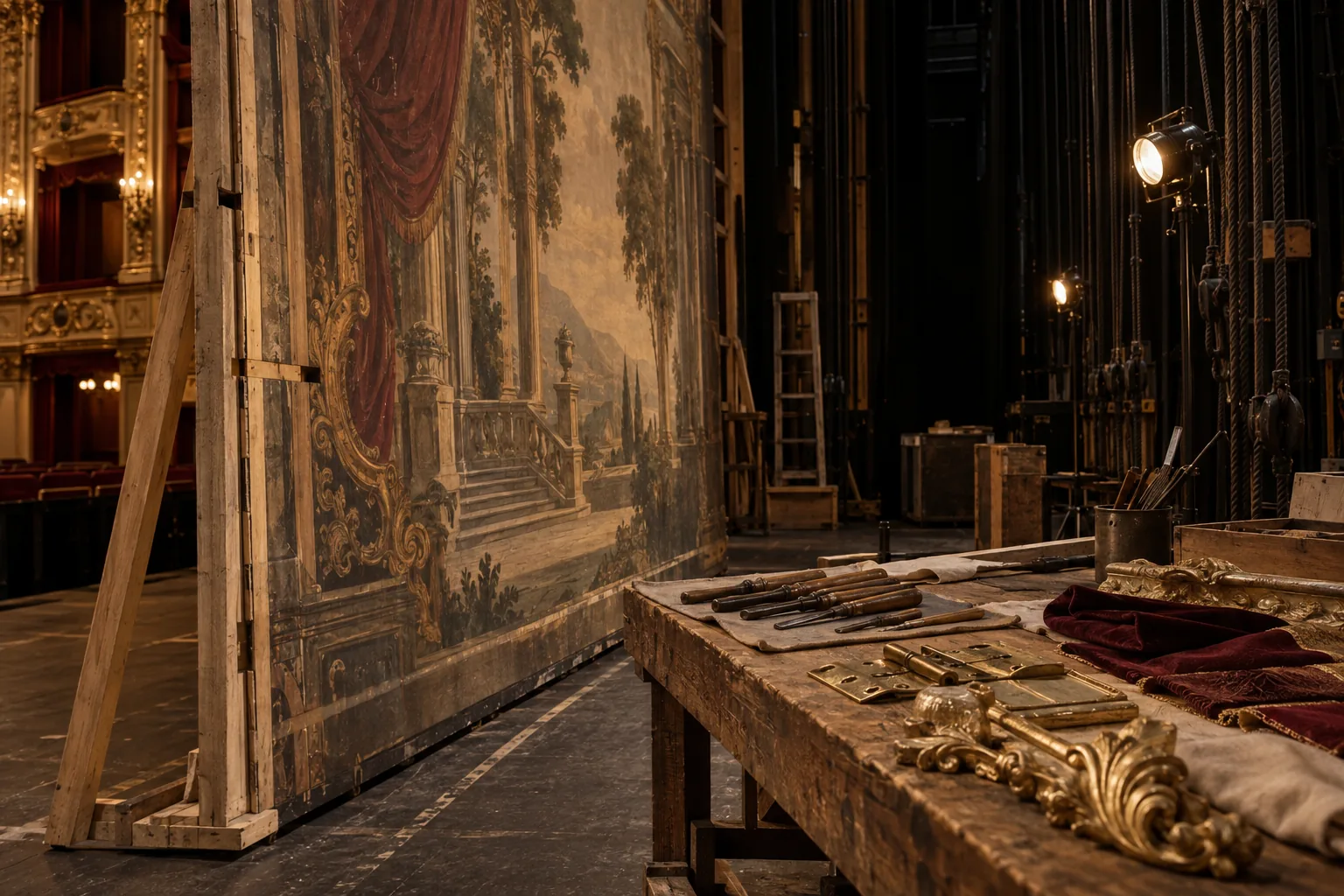
The workshop image offers something specific: a painted scenic flat, tools and cut velvet. The camera can show those details. It cannot establish when they were repaired or by whom.
Choose a close shot for what it can establish. Hold a claim about restoration method or timing until a work record or a named source confirms it. Attractive footage without a role in the question stays out of the cut.
EDITORIAL FIELD NOTE THE FRAME HAS A LIMIT
03 / The editorial cut
The order changes the story.
Three frames can raise a question, show material and deliver a reveal. Change their order; the same photographs can gain or lose a conclusion.
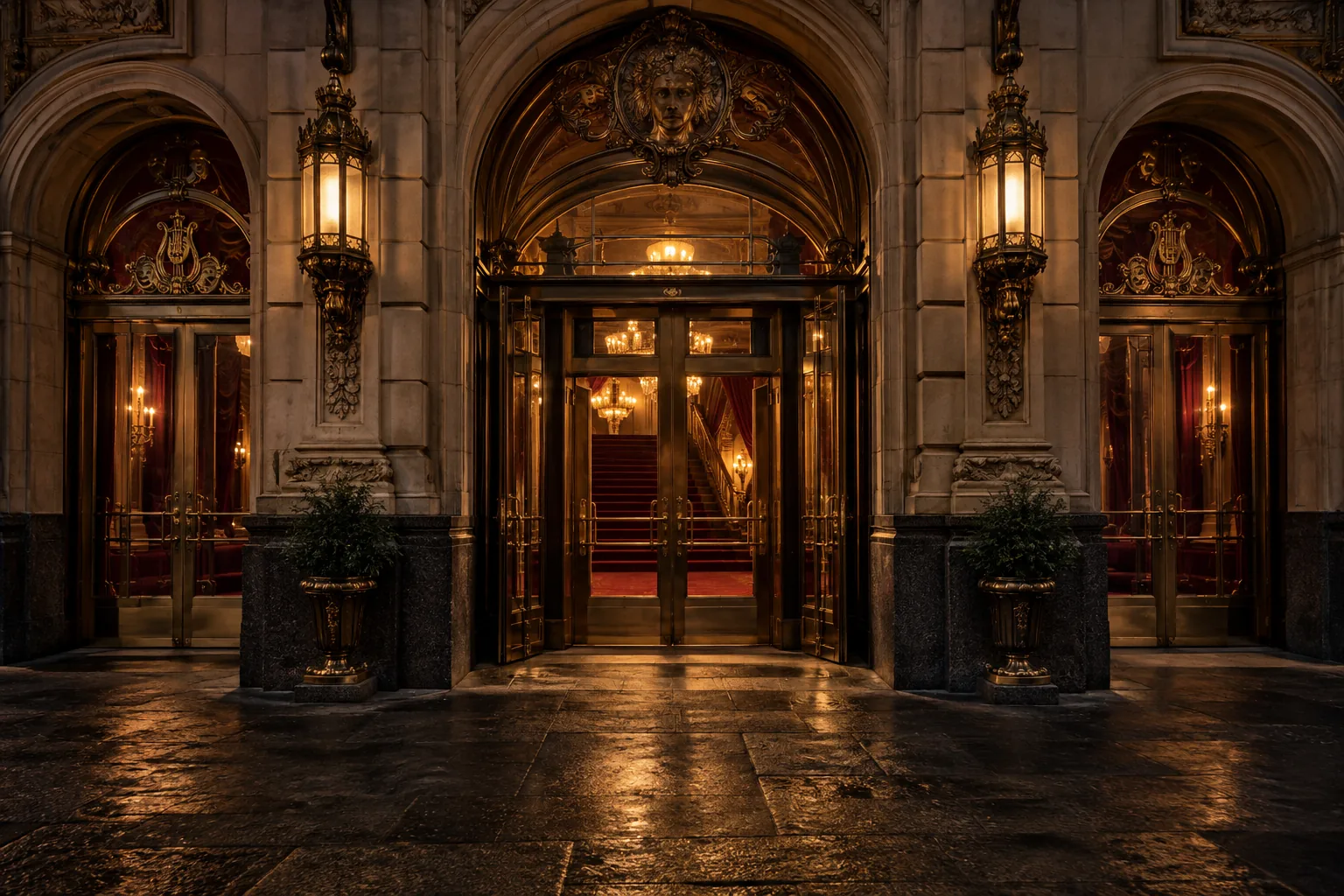
CUE 01 / OPENA doorway raises a question before the room appears.
Move a scene, then examine every cue. The same photographs can make a different argument.
- 01The entrance
- 02Behind the scene
- 03The finished room
The reveal has a reason.
The door poses a question. The workshop gives it substance. The finished room closes the cut.
The smallest frame
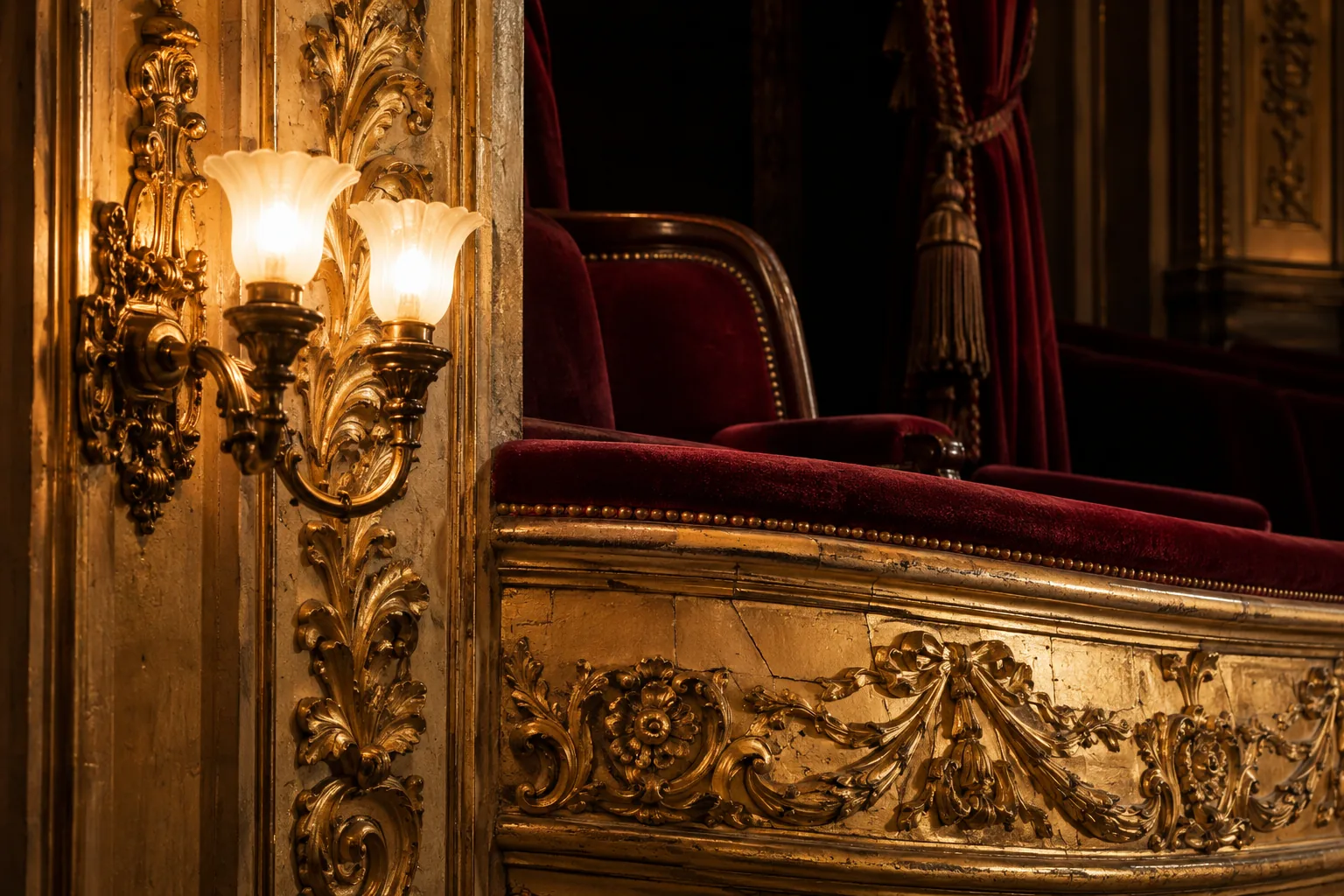
Detail gives scale.
The gilt edge is a different detail from the painted scenery. A close shot earns its place when a source connects it to the same account of the theatre.
04 / After the edit
Release. Listen. Recut.
A 16:9 frame leaves space for architecture. A 4:5 crop can bring the workshop closer. The opening line needs legible backing in both. Neither format can rescue an unsupported claim.
A published cut is a test of understanding. If a visitor asks what was actually restored, the edit has left a gap. Move the workshop earlier, make the detail's role clear and check any factual answer against a source.
THE REVIEW ROOM CUT 01 → CUT 02
One question. A sharper cut.
A possible audience question exposes a gap in the first cut. The revision keeps the same three images and changes their order.
Entrance balcony detail scenic flat.
02 / POSSIBLE AUDIENCE QUESTION“What was actually worked on?”
Move the scenic flat to cue 02. Let the balcony detail follow as a separate subject.
Revised cut selected: entrance, scenic flat, balcony detail.
The entranceThe doors establish the place. The scenic flatA painted scenic flat and tools show a work setting. The balcony detailA separate balcony detail; no proof of work on the scenic flat.
Only cues 02 and 03 trade places. The earlier workroom image gives the question a visible subject. The balcony image shows a different part of the theatre; neither image documents a real restoration.
Fictional editorial example with generated theatre images. Restoration claims would require a production record or an interview.