Business / Field note 01
The business grew.
The website didn't.
A company can change faster than the story customers find online. Follow three places where that gap becomes visible.
Read the article
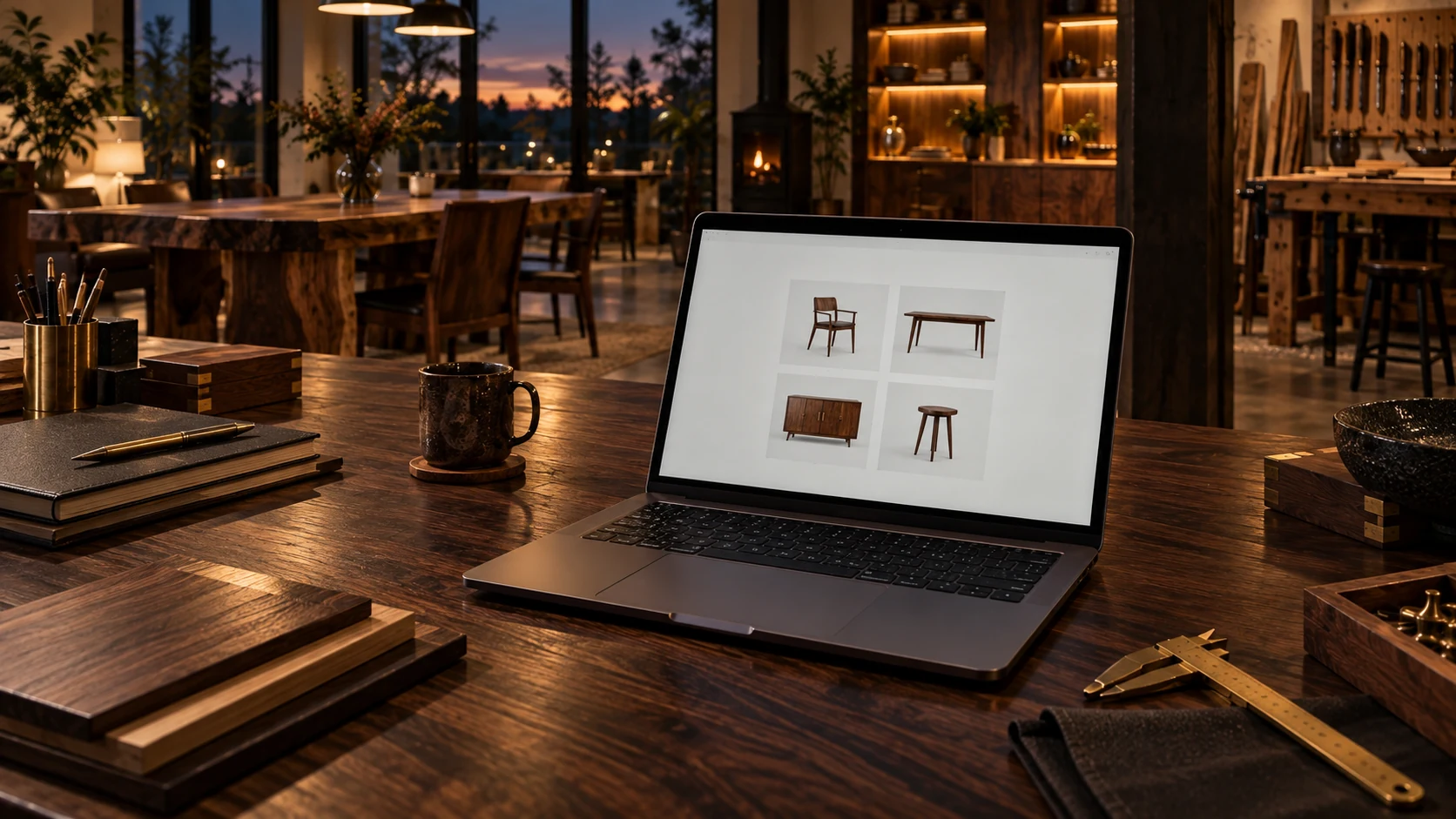
A furniture workshop now builds bespoke pieces for homes and businesses. Its website still shows a small launch catalogue. The showroom says one thing; the site says another. New customers can only judge the version they see.
The same lag appears when any business expands its services. Three checks expose it: the first screen, the route to contact, and the questions arriving anyway.
The first impression
The offer looks smaller.
A visitor needs the current offer, a reason to trust the work and a clear next step. Old service descriptions or missing projects make a capable company appear smaller than it is.
Open the site on a phone as a new visitor. Can the current offer and a real example be found within a few seconds?
Check the evidence
- Is the current offer clear on the first screen?
- Do recent projects show the range and quality?
- Does mobile contact work without a detour?

The route to contact
The route breaks early.
Interest may begin in search or on social media. The next step happens on the website. If the promise changes, an answer is hidden or the contact route fails, the enquiry ends before a conversation starts.
Trace one journey from the first result to the inbox. The three steps below show where the handoff can fail.
The feedback loop
Questions mark the gaps.
Customer questions expose what the site has not resolved. Price, timing and suitability often surface before a buyer is ready to make contact.
Read the last ten genuine enquiries or reviews. Move the recurring answer onto the page where the question first arises, then assign someone to respond when a new question appears.
The next move
Fix the first visible gap.
Choose one mismatch: an old portfolio, a broken contact step or an unanswered buying question. Change the relevant page, then ask an outsider to test the path.
Discuss the next step